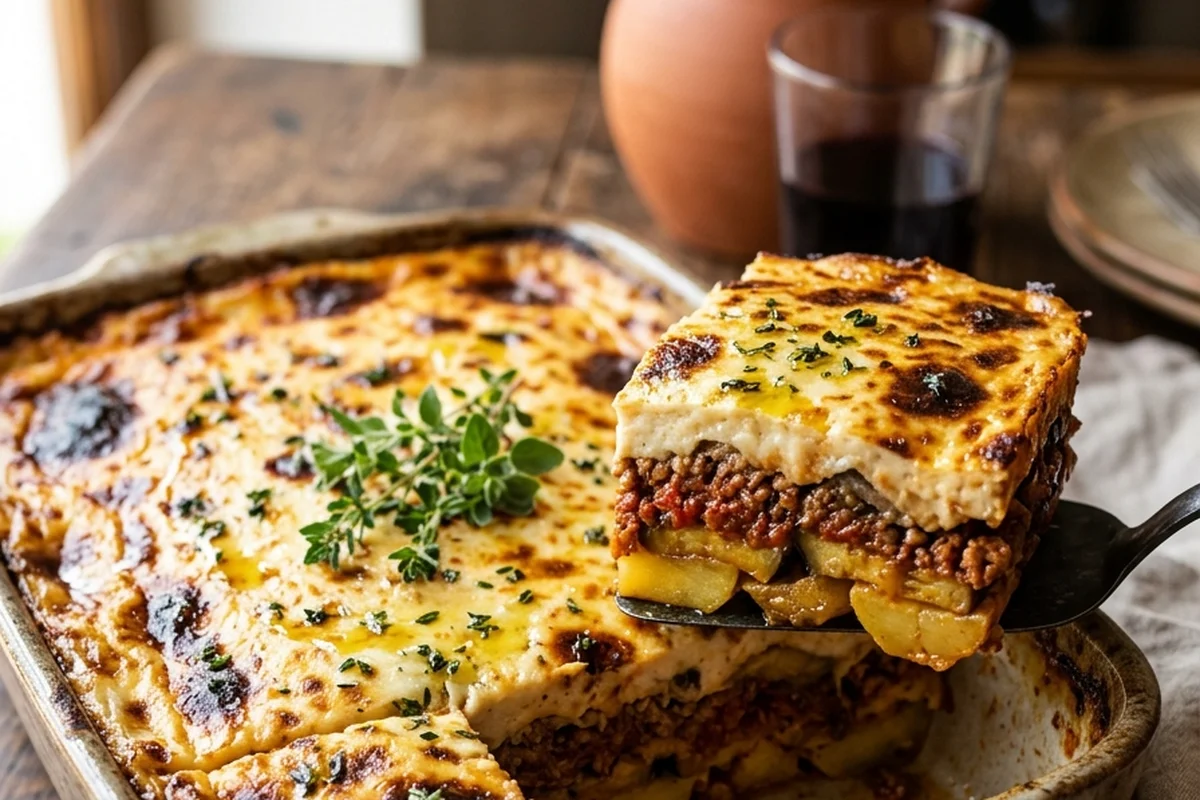
The national dish of Greece: Layers of roasted eggplant, spiced lamb & beef red wine ragu, topped with a thick crown of creamy baked Bechamel sauce. Tested extensively in our home test kitchen, this dish pairs authentic, deep culinary technique with accessible weeknight timing.
Why This Recipe Works (Culinary Science & Test Kitchen Secrets)
- Balanced Flavor Foundations: Carefully calibrated seasonings ensure that every layer harmonizes without overpowering the core fresh ingredients.
- Precise Heat Control: Cooking at targeted temperatures locks in natural moisture while developing an exquisite, golden crust or glossy reduction.
- Foolproof Proportions: Repeatedly tested to guarantee repeatable, restaurant-quality results for both beginners and experienced home chefs.
Frequently Asked Questions (FAQ)
Why is my moussaka watery on the bottom? expand_more
Watery moussaka is caused by not roasting the vegetables long enough to evaporate moisture, or not simmering the meat sauce until thick. Salting the eggplant and simmering the sauce dry prevents this completely.
Can I make vegetarian moussaka? expand_more
Yes! Replace the ground lamb with brown lentils and finely chopped portobello mushrooms simmered with the same red wine, cinnamon, and allspice.
What is the difference between Greek and Turkish Moussaka? expand_more
Greek moussaka is a layered baked casserole topped with thick custard béchamel. Turkish musakka is a stovetop stew of sauteed eggplant, peppers, and ground meat served without béchamel.
Can I make moussaka without potatoes? expand_more
Yes! While potatoes are traditional in Greek homes to provide a sturdy structural foundation for the meat, you can omit them and use exclusively eggplant and zucchini.
What cheese is best for the béchamel topping? expand_more
Kefalotyri or Graviera are authentic Greek hard sheep's milk cheeses. Pecorino Romano or Parmigiano-Reggiano are outstanding, easily accessible substitutes.